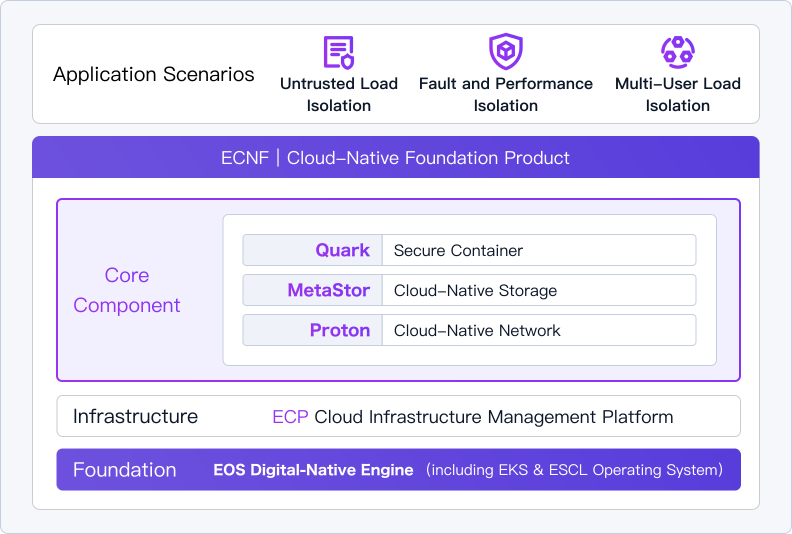
ECNF Cloud-Native Foundation Product
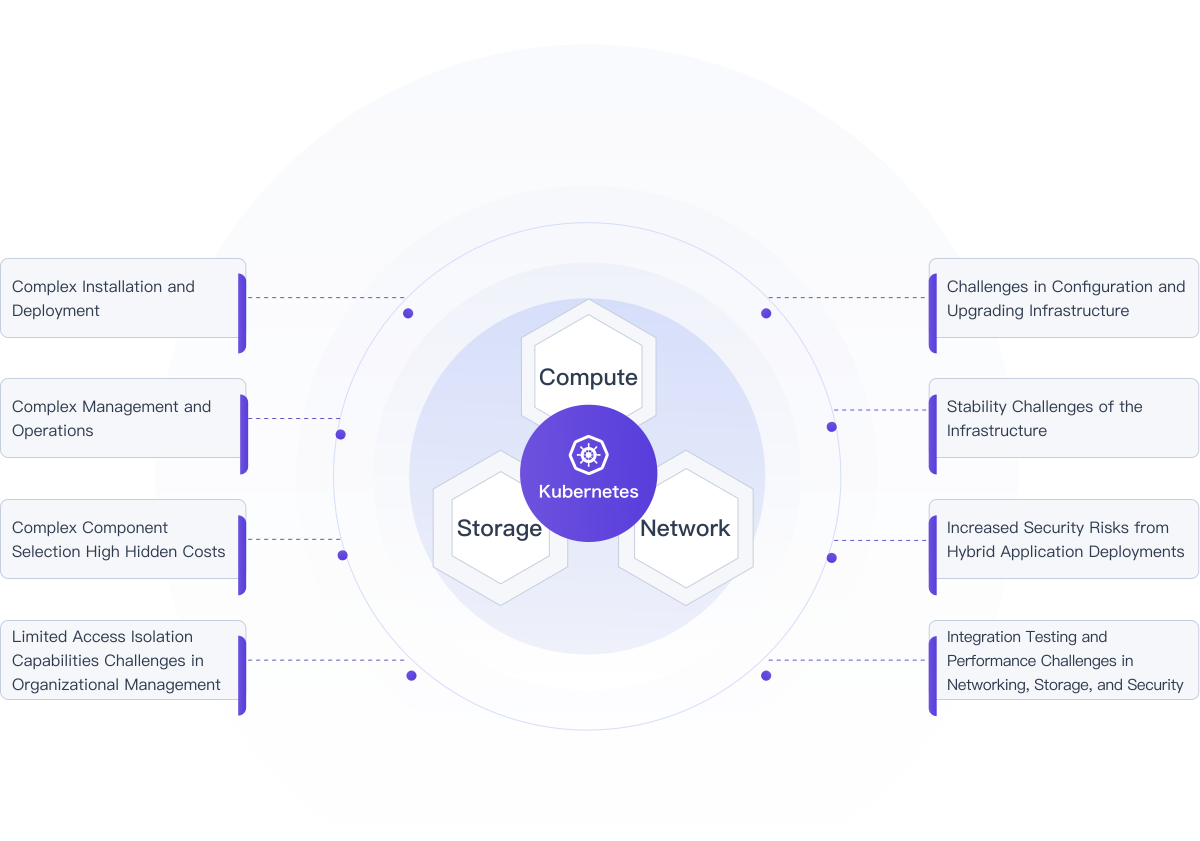
A Kubernetes, storage, and networking integration product designed for multiple container runtimes, used to build infrastructure for hosting modern applications
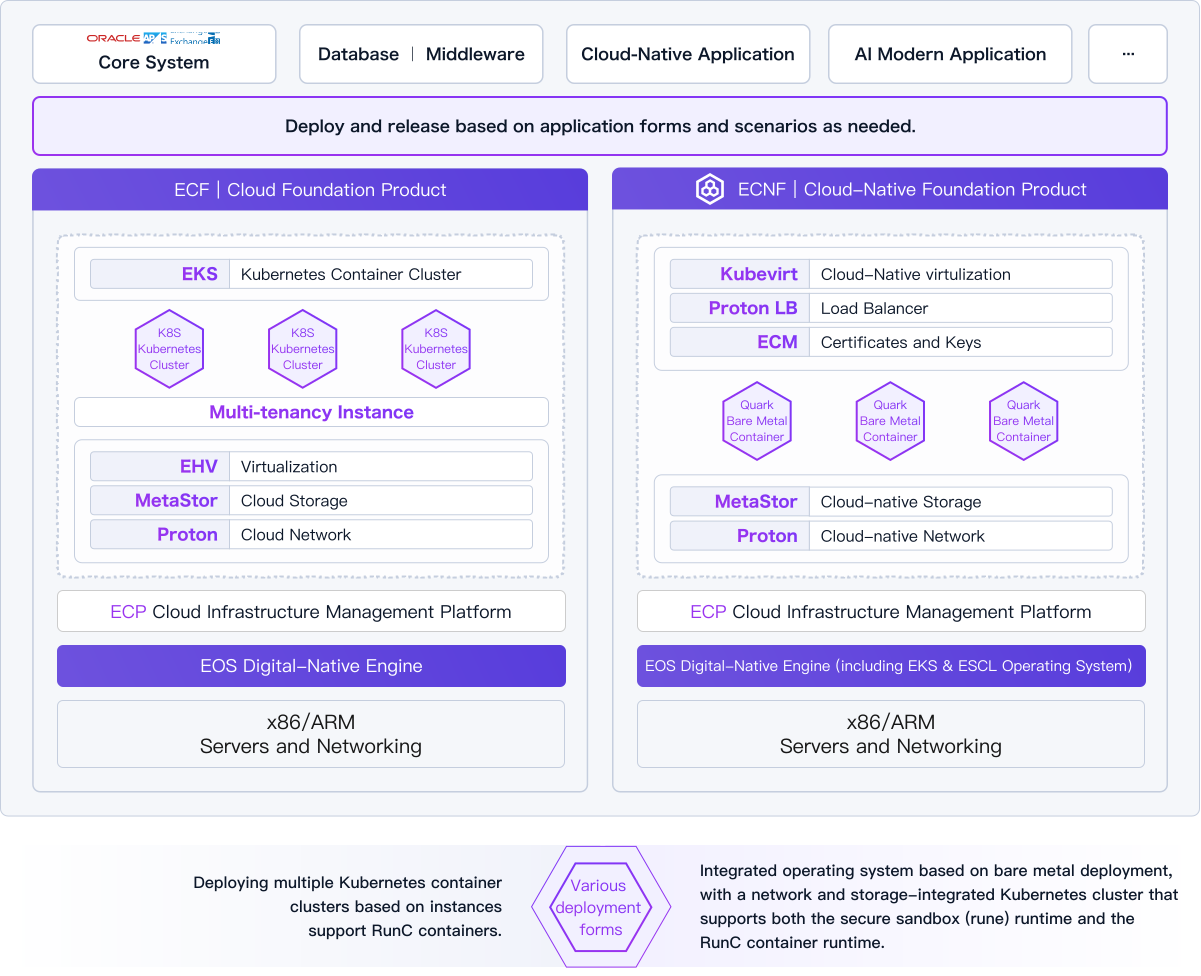
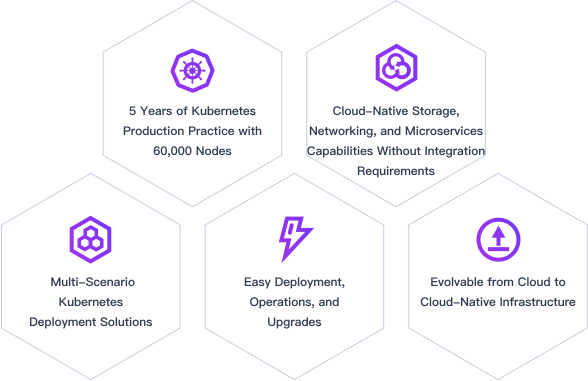
EasyStack Cloud Native Foundation (ECNF) integrates infrastructure, cloud-native technologies, and management into a unified platform. This platform comprises EKS Kubernetes clusters, secure containers, runC runtime, secure sandbox (rune) runtime, as well as storage, networking, operating systems, and related components designed for cloud-native applications, all embedded within a digital native engine. With flexible deployment options and an evolvable architecture, it supports the development and operational requirements of modern applications across various infrastructure scenarios.
Proton utilizes the widely adopted Kube-OVN as its core, providing a network model and operational experience consistent with instance、secure container and bare metal.
Learn more→Native integration with MetaStor Cloud-Native Storage, enabling on-demand deployment and scaling.
Learn more→The cloud infrastructure management platform encompasses capabilities such as cluster deployment, scaling, upgrades, monitoring, logging, alerting, and multi-cluster management.
Learn more→In container scenarios, Pod resources can change dynamically. Software load balancing can more easily adapt to these changes, such as supporting automatic failover for ingress-controller pods and on-demand scaling. These requirements are challenging to meet with hardware load balancers in cloud-native applications.
In container scenarios, independent load balancing instances can be allocated based on project team dimensions, allowing exclusive access to CPU, memory, network, and other resources. This approach meets the load balancing requirements of various business scenarios.
Flexible configuration of active-active instances provides robust reliability and high availability. Withstanding peak loads and avoiding bottlenecks, the high-performance load balancing achieved through active-active topology supports up to 500,000 QPS per instance, effortlessly handling tens of thousands of concurrent requests and enabling rapid responses to market changes.
Flexibly control the load balancer by enabling or disabling listeners, resource pools, and members to achieve precise traffic control. It intelligently distributes traffic requests and supports various load balancing algorithms to optimize the utilization of backend service resources. With support for multiple protocols, it adapts to various scenario requirements, creating personalized load balancing services.
Proton LB supports four-layer load balancing for TCP, UDP, and PROXY protocols, helping network applications achieve high performance and high availability. It also offers seven-layer load balancing for HTTP and HTTPS protocols, intelligently distributing requests and comprehensively covering your application services.